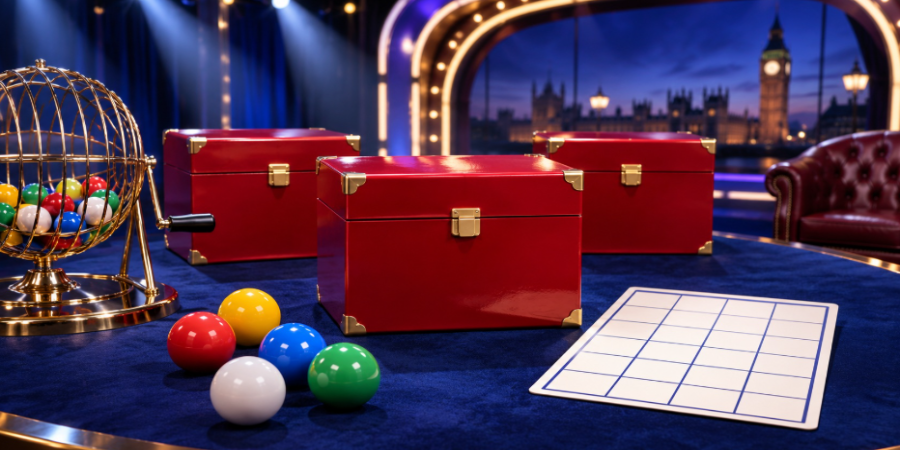
A red box can do a surprising amount of work. Put it under a studio light and many viewers will immediately think of a telephone, a mysterious banker and a decision made with everyone watching. Television formats build this kind of recognition over years. Games can borrow some of that familiarity without recreating the programme itself.
Casino Kings’ bingo casino offering includes a Deal or No Deal-themed room, placing a recognisable television identity within a bingo setting. The connection is easy to understand visually, but the distinction is worth keeping: a themed bingo game has its own published rules. Knowing the television programme does not give a player control over a bingo draw.
An old format with a new audience
ITV’s recommission announcement in January 2024 followed the programme’s return with Stephen Mulhern as host. The broadcaster reported that the launch series had reached 13.7 million viewers across devices. That is a useful reminder that reviving a familiar format can attract substantial attention in a viewing market crowded with new titles.
The international story has continued. Banijay’s April update in 2026 announced returning adaptations in the Philippines and Turkey. The producer and distributor’s account offers a concrete example of the same basic idea being refreshed for different audiences rather than discarded once its original run ends.
The appeal is partly structural. A viewer understands the central situation quickly: concealed amounts, boxes removed from play and a recurring decision. There is space for conversation and personality around that structure. Even someone who joins an episode halfway through can usually work out what matters without a long explanation.
Recognition does some of the introductory work
A television theme gives a game designer a store of images, sounds and expectations. A familiar visual can establish the mood before a player has read a description. That can make a themed room feel more approachable, much as a film adaptation gives readers an immediate point of reference.
However, recognition and understanding are different things. The underlying bingo format determines what counts as a winning ticket, how a round progresses and which features apply. Those details need to stand on their own. A television title can attract attention, but it cannot explain every condition attached to the game carrying its name.
Bingo has room for this sort of borrowing because its central action is so recognisable. Numbers are called, tickets are checked and a defined pattern or completed ticket resolves the round. Designers can change the surrounding presentation while leaving players with a clear sense of the activity they have chosen.
There is also an editorial distinction between suspense and strategy. A television programme can encourage viewers to debate what they would do in the contestant’s position. A bingo round does not become a contest of judgement simply because it adopts that programme’s imagery. The entertainment comes from following the event, with outcomes determined by the game’s mechanics.
The continuing life of Deal or No Deal shows how durable a well-defined entertainment identity can be. Its journey into bingo is one small part of that wider story. Familiarity provides the invitation; the individual game still has to explain what happens after the player arrives.