Sportradar processed data from close to a million sporting events in 2024 — a quiet flood feeding into betting apps before most fans had finished watching the replay. The distance between a thing happening on a field and that thing becoming a button on a screen keeps shrinking, and what fills that gap now shapes how people bet. Tools connected to platforms like bizbet often sit inside that same flow of live data, appearing less as a separate destination and more as part of the wider second-screen experience.
The Feed Nobody Sees
When a tennis player double-faults in an ATP match, the moment travels through a chain of hands and servers before it reaches anyone’s phone. An invisible workforce of around 6,000 Sportradar data collectors spread across more than 90 countries logs actions in real time from stadiums, arenas, and courts that most bettors will never visit. The data doesn’t arrive clean. It has to be normalized, tagged, structured, and pushed through an API – all inside a window measured in fractions of a second.
That razor-thin margin is where money either moves correctly or doesn’t. If a feed lags by even two or three seconds during a live football match, odds on the screen stop matching reality, and the sportsbook’s risk desk starts bleeding.
Still, latency is only one cost. Sportradar’s sports rights expenses spiked 75% in a single quarter of 2024, a bloated line item tied mostly to new deals with the ATP and the NBA. The rights to collect and distribute live data from a major league aren’t getting cheaper.
Where Stats Meet Thumbs
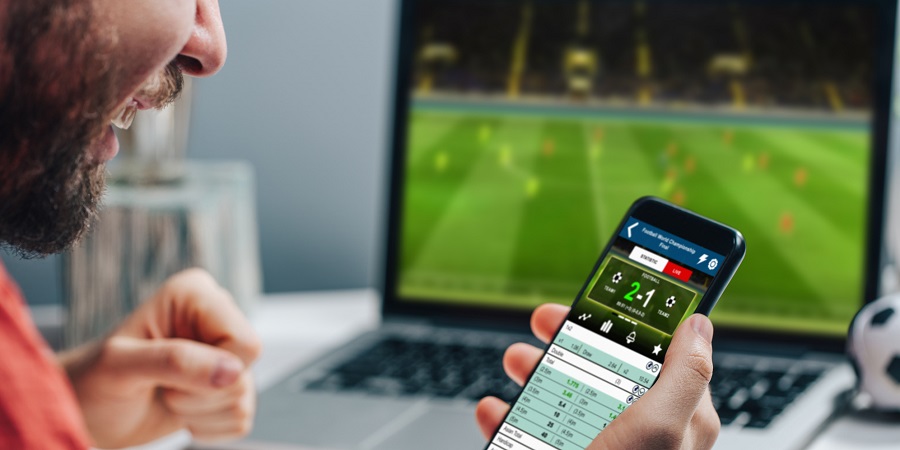
Five years ago, an in-play betting screen showed the score, a clock, maybe a handful of markets. That was the whole product. Now the same screen can surface dozens of micro-markets generated from live player tracking: next assist, next three-pointer, total distance run in the second half. Each one exists because a data pipeline turned a physical action into a tradeable proposition fast enough for someone to tap before the moment passed. On a smaller screen, the density gets even tighter – sites like https://mn-bizbet.io/mobile pack live odds alongside player stats in a layout where the thumb does more work than the eye.
Stat integration in betting apps has spilled over from a back-end concern into the primary design layer of the product itself. Sportradar’s micro-markets for ATP tennis matches now generate around 1,500 new betting options per match, an overnight multiplication of what the same screen offered two years ago. On the basketball side, their emBET tool sits inside NBA League Pass, layering point spreads and moneylines directly onto the live stream so a viewer never has to leave the video to see updated odds.
Prop bets – wagers on individual player performance rather than game outcomes – have grown stubborn, making up as much as 30% of all bets placed on certain NFL games. That share comes from data feeds granular enough to price a single receiver’s second-half yardage while the first half is still being played.
Who Sells the Numbers
Not all data is created equal, and the companies supplying it have built very different businesses around very different sports.
- Sportradar crossed €1.1 billion in annual revenue for 2024, a figure that dwarfed its own numbers from just three years earlier. The NBA, ATP, NHL, MLB, NASCAR, UEFA – the roster of exclusive or semi-exclusive deals is long enough to make competitors’ portfolios look threadbare.
- Genius Sports pried the NFL’s exclusive data rights away from Sportradar in 2021 and hasn’t let go. The league handed over millions of shares as part of the arrangement, extended the partnership through the 2030 Super Bowl, and now funnels every official play-by-play stat and Next Gen Stats feed through a single gatekeeper.
- Stats Perform takes a different shape. Its Opta brand tags events at a depth few competitors touch in football – expected goals, pass trajectories, pressing sequences – across thousands of competitions each season. An S&P credit downgrade to CCC in late 2025 signaled the company’s financial footing had stalled out even as the data itself stayed sharp.
- Then there’s the invisible layer. Sportradar’s 4Sight technology won Betting Product of the Year at the 2024 American Gambling Awards. Opta Vision tracks every player on a football pitch continuously, generating XY coordinates from kickoff to final whistle without manual input. The line between stats collected by people and stats generated by machines has crept so far that the two now feed into the same pipelines.
Gaps in the Feed
Live in-play betting eclipsed every other format in 2024, swallowing nearly 60% of the online sports betting market. All of it depends on data arriving fast, clean, and from a source the operator trusts. And yet almost every major data relationship in this industry runs through one of three companies.
That concentration creates something lopsided. When Genius Sports took the NFL contract from Sportradar in 2021, the price jumped sixfold overnight. Access narrowed, and every operator downstream soaked up the cost without much say in the matter. Sportradar’s announcement in early 2025 that it would acquire IMG Arena – a sprawling portfolio of data and streaming rights stretching across every inhabited continent – only tightens that grip further.
Whether more data inside a betting app actually helps someone make better decisions, or just gives them more things to bet on more often, is a question the industry hasn’t had to answer yet. Maybe it doesn’t want to. Hard to tell from the outside. The numbers keep moving, the feeds keep getting faster, and the screen keeps adding buttons – but nobody’s published a study on what all those extra options do to a bettor’s evening. That part of the story is still sideways, still unwritten, still somebody else’s problem to figure out.