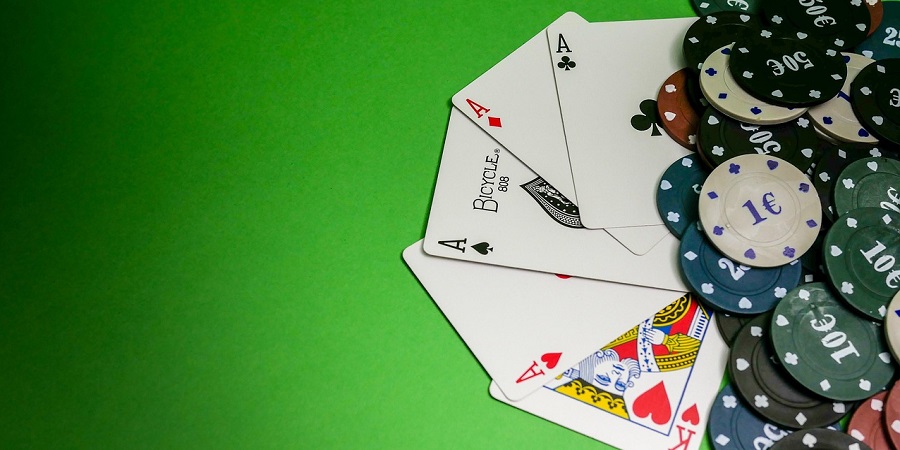
Take a standard pack and remove every card from two through six. The deck now holds 32 cards, with ranks from seven to ace in all four suits.
The change looks modest. It is not.
High cards crowd each hand, suit length becomes easier to judge, and every missing honour carries more weight. Familiar assumptions about hand strength can stop working almost immediately.
Poker players often feel comfortable for the first few deals. They are still reading incomplete information, weighing risk and watching what other players reveal through their decisions. Then the local rules begin to matter. A flush may beat a full house. A jack may become the strongest trump. A bid can commit one player to a target before all useful information is available.
That friction is what makes 32-card games interesting. The five games below are not simply alternatives to poker. Each takes skills a poker player already uses — probability, memory, range reading, commitment and adaptation — and tests them under a different set of rules.
What Changes When the Deck Drops to 32 Cards
Strong ranks become ordinary
Removing the twos through sixes changes much more than the size of the deck.
There are 2,598,960 possible five-card combinations in a standard 52-card pack. A 32-card deck produces only 201,376.
That smaller pool does not make decisions trivial. It compresses the range of possible holdings. High cards appear constantly, pairs become less remarkable and hands that would look unusually strong in a full deck can become routine.
Card removal also becomes easier to use.
A single known ace represents one of four aces in either deck, but in a 32-card game it belongs to a much smaller pool of unseen cards. Once several high cards have appeared, a careful player can narrow the remaining possibilities surprisingly quickly.
That is particularly important in trick-taking games, where tracking a few cards can reveal the likely shape of an entire suit.
The ranking sheet belongs on the table
There is no universal hand or card ranking that covers every 32-card game.
Some versions of 32-card draw poker rank a flush above a full house. In Belote, choosing trump completely changes the normal hierarchy of the cards. Regional rules may also alter straights, scoring or tie-break procedures.
Agree on those details before the first deal.
A short rules check is not just for beginners. It prevents experienced card players from importing assumptions from another game and making a perfectly logical decision under the wrong rules.
32-Card Draw Poker Changes the Familiar Math
A flush can move above a full house
For a poker player, 32-card draw poker is the easiest place to begin because much of the structure feels familiar.
Five cards are dealt to each player and a draw gives players an opportunity to improve their hands. The important difference is that removing 20 low cards changes the frequency of the remaining combinations.
One of the most striking consequences is the position of the flush.
Under rules that adjust hand rankings to the shortened deck, a flush can rank above a full house because the relative probabilities have changed. With only eight cards in each suit, making five cards of the same suit is much less common than it is with a 52-card deck.
This is a useful reminder that poker hand rankings are not arbitrary decorations. They reflect the underlying structure of the game.
Change the deck and the mathematics changes with it.
Card removal deserves more attention
The compact deck also makes blockers and known cards more informative.
Suppose a queen has already appeared. One of the four queens is gone, just as it would be in a standard deck, but that queen now represents a larger share of the cards that could otherwise complete an opponent’s holding.
The same principle applies to suits. Once several cards of one suit are accounted for, there are relatively few left to locate.
Poker players who want a reference point can experiment with a standard poker odds calculator before moving into shortened-deck examples. A Hold’em calculator will not model these 32-card games directly, but it makes the underlying concept easy to see: remove known hole cards and community cards from the available deck and the equity of the remaining hands changes with every new piece of information.
The lesson carries over even when the rules do not. Known cards reduce the set of possible outcomes, and good players continually update their expectations as that set becomes smaller.
Discard choices say more
Drawing decisions provide another source of information.
A player who replaces one card may be protecting a made hand or chasing a specific improvement. Someone taking three new cards is much more likely to have started with a pair or another limited holding.
None of those reads is certain.
What changes in the 32-card game is how quickly the possibilities narrow. With fewer cards and ranks available, every discard provides a little more information about what may remain behind.
That makes disciplined observation particularly valuable.
Skat Rewards Exact Bids and Clear Memory
One declarer faces two defenders
Skat is a three-player trick-taking game built around a 32-card deck.
Ten cards go to each player, while the remaining two form the skat. An auction determines the declarer, who then plays against the other two players.
The structure immediately creates a different sort of pressure from poker. Before the main card play begins, the declarer has already made a public statement about the strength and potential of the hand.
Skat also separates card points from the value of the game itself.
Aces are worth 11 card points, tens 10, kings four, queens three and jacks two. The full pack therefore contains 120 card points. In many ordinary suit and grand games, the declarer aims to collect at least 61.
The eventual result depends on more than simply counting tricks.
What poker players can take from Skat
The auction punishes vague confidence.
A hand may look impressive without supporting the value a player is prepared to bid. Strong Skat players therefore learn to distinguish between cards that merely look good and cards that actually support a contract.
That distinction should sound familiar to poker players.
A visually attractive poker hand does not justify unlimited aggression. Its value depends on position, ranges, stack depth and what an opponent is likely to continue with.
Skat applies the same discipline in another form. Players count their strongest cards, identify weaknesses and decide how much confidence the hand genuinely deserves before committing themselves.
The defenders add another layer.
They share an objective but cannot openly describe their cards. Leads, discards and previous tricks gradually build a picture of what each player may hold.
Anyone accustomed to studying bet sizes, checking patterns and timing at a poker table will recognise the broader skill: extracting information from actions when direct communication is unavailable.
Belote Makes Trump a Different Suit
The jack and nine rise above the ace
Belote is normally played by four players in two partnerships, with teammates sitting opposite one another.
Once a trump suit has been established, familiar card values are turned upside down.
The jack becomes the strongest trump card and is worth 20 points. The nine sits directly beneath it and is worth 14. In non-trump suits, the ace returns to the top of the hierarchy, followed by the ten.
For a poker player, the interesting part is not memorising those values. It is learning to stop treating the printed rank of a card as its permanent strength.
Context determines value.
A jack that is relatively ordinary in one suit can become the most important card in the deal when that suit is trump.
Partnership changes the value of a lead
Partnership play adds another dimension.
Every card communicates something not only to opponents but also to a teammate. A lead might indicate strength, create an opportunity for a partner or help establish which player is short in a particular suit.
The immediate winner of a trick is therefore not always the only consideration.
Sometimes a card is played because of what it reveals or enables later.
That concept transfers neatly to poker. Information can have value even when it does not create an immediate return. A small bet, check or disciplined fold can shape later decisions because it changes what everyone at the table knows — or believes they know — about a player’s range.
Belote makes that exchange of information unusually visible.
Piquet Turns Two Hands Into a Close Study
The exchange shapes the whole deal
Piquet is a two-player game played with a 32-card pack.
Each player receives 12 cards, leaving eight in the talon. Before trick play begins, players can discard cards and replace them from that remaining pool.
The exchange matters because it shapes everything that follows.
Players then compare elements of their holdings, including suit length, sequences and sets. These declarations reveal information before the first trick is played.
Importantly, silence can reveal information too.
If a player cannot beat an opponent’s declaration, certain stronger combinations can be ruled out. By the time card play begins, neither hand is fully known, but neither is completely mysterious.
Why range readers tend to enjoy it
This makes Piquet especially appealing to players who enjoy narrowing ranges.
A long declared suit changes the likely distribution of the cards outside that suit. A failed comparison eliminates certain combinations. Cards taken from the talon introduce uncertainty, but they do not erase everything already learned.
Each new piece of information reduces the number of plausible holdings.
There is no river bluff or oversized bet to interpret, yet the thought process feels surprisingly familiar.
You start with a wide set of possibilities. Actions reveal information. Some holdings become impossible, others become more likely, and your decision improves as the range becomes narrower.
That is range reading stripped back to cards and deduction.
Preference Tests Contract Discipline
The bidder accepts a target
Preference, along with closely related regional variants, uses a 32-card deck and combines bidding with trick-taking.
Three players receive ten cards each, leaving two cards aside. The successful bidder can use those additional cards before discarding two and playing the chosen contract.
In common forms of the game, the declarer commits to winning a required number of tricks. The defenders have their own incentives and obligations, which means the relationship between the three players is more complicated than a permanent two-against-one partnership.
The auction therefore matters enormously.
A bidder is not merely saying that the hand looks strong. The bidder is defining what that strength should be capable of achieving.
Commitment matters more than bravado
This is where Preference becomes particularly useful for poker players.
An aggressive contract can create an advantage, but only if the cards support it. Overestimating a hand leaves less room to recover once play begins.
Good bidding starts with an honest count.
How many tricks are genuinely secure? Where are the likely entries? Which suits could become a problem? How much needs to go right for the contract to succeed?
Poker presents the same tension in a different format.
Aggression is valuable when the hand, range, position and price support it. Aggression without those foundations is simply expensive confidence.
Preference removes the chips and leaves the quality of that judgment exposed.
Why Poker Players Adapt Well to 32-Card Games
The mechanics differ, but the underlying habits overlap more than they first appear.
Count what has disappeared
Poker players already understand blockers, dead cards and the importance of removing impossible combinations from a range.
A 32-card deck magnifies that habit.
With fewer cards available, tracking what has already appeared can tell you much more about what remains.
Recalculate when the rules change
Moving from one poker format to another requires adjustment. A strong tournament strategy may not transfer directly to a deep cash game. Short-handed play is different from a full table.
The same principle applies here.
Do not assume an ace has the same importance in every game. Do not assume familiar poker hand rankings survive an altered deck. Do not assume that winning the current trick is always more important than controlling the next one.
Learn the rules first and calculate from there.
Treat actions as information
A bid in Skat, a declaration in Piquet, a discard in draw poker and a lead in Belote all reveal something.
The exact message varies, but the process is the same one poker players use when interpreting checks, raises and folds.
Every action changes the probability of the stories that remain possible.
Separate confidence from commitment
Several 32-card games force players to state the strength of their hands before the final result is known.
That makes overconfidence expensive.
Whether the commitment takes the form of a Skat bid, a Preference contract or chips entering a poker pot, the useful question remains the same:
Does the available information justify the risk being taken?
Choose the Game That Exposes a Weak Spot
Start with 32-card draw poker if you want familiar poker decisions under unfamiliar probabilities.
Choose Skat if you want to test bidding discipline and card memory.
Belote suits players who enjoy partnerships, signalling and adapting to changing card values.
Piquet rewards close observation and systematic deduction between two players.
Preference puts commitment and contract judgment under direct pressure.
None of these games is merely poker with 20 cards removed.
Each has its own history, scoring system and table logic. Give those rules the same respect you would give a new poker variant. Keep a ranking or scoring sheet nearby for the first few rounds, agree on any regional variations and learn the structure before adding serious stakes.
A smaller deck leaves less room for loose assumptions.
That is part of its appeal. It asks players to count carefully, pay attention to what disappears and revise their judgment whenever new information reaches the table.
Those are useful habits whether the next hand contains 32 cards or 52.