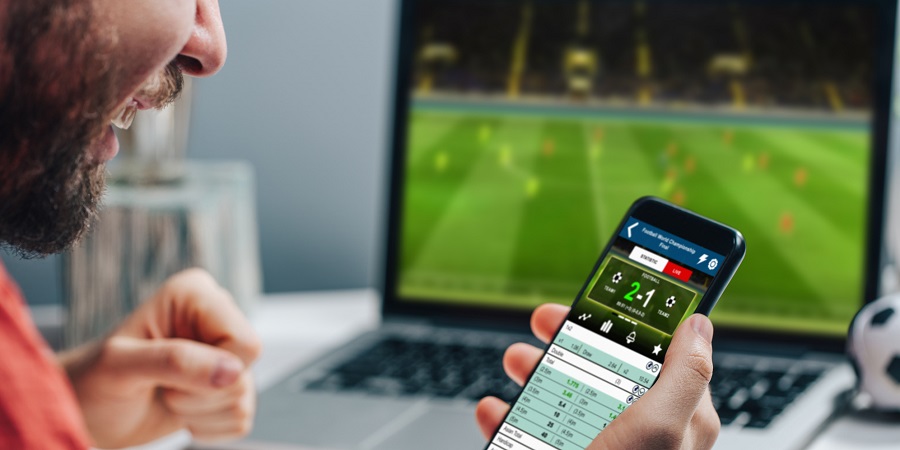
A frozen cash out screen during the final ten minutes of a live match is one of the most reliable ways to lose a regular bettor permanently. Load times, in-play reprice speed, cash out reliability and notification quality have become the metrics that experienced punters use to assess a platform, and none of them show up in an app store screenshot.
The features that matter most to regular bettors are almost never the ones featured in acquisition campaigns. They show up in the experience of using the app under pressure, repeatedly, across a full season.
In-Play Reprice Speed Is Where Platforms Lose Credibility
An in-play market on a football match replicates continuously. A goal, a red card, a penalty awarded or overturned by VAR all trigger immediate odds movement, and the platform that lags on this by even two or three seconds is offering stale prices to anyone quick enough to notice. For punters running arbitrage across books, that lag creates opportunity. For the platform, it creates liability and erodes trust simultaneously.
Cash out is the function most directly dependent on this infrastructure. A punter attempting to lock in a return during a live match needs the request to process in real time, not queue behind a system under load. The platforms that handle peak Saturday traffic without degrading their in-play response time have invested significantly in their backend capacity. Those that do not tend to be identifiable by their forum reputation as much as by any feature comparison.
Punters assessing different gambling apps side by side will find the performance gap most visible during live events rather than in pre-match browsing, where most platforms feel broadly comparable. The distinction only becomes clear when there is genuine time pressure and money on the line.
Push Notifications Either Add Value or Train Users to Ignore Them
Notification strategy separates the platforms that understand their users from those treating push messaging as a broadcast channel. A notification about a price movement on a market a punter has actively tracked is useful. A generic daily reminder to place a bet, sent regardless of what is happening in sport, trains the user to disable notifications entirely within a few weeks of downloading the app.
The better implementations are event-driven rather than time-driven. A goal in a match someone has a bet running on, a cash out value crossing a threshold the user has set, odds moving significantly on a tracked selection. These are notifications with information content. They retain permission rather than burning it.
The UK sports betting market puts mobile wagering as the dominant format for UK sports bettors, which means notification decisions are now being made at scale. Notification fatigue is a documented churn driver across consumer app categories, and the operators with the strongest retention numbers tend to be those that treated push messaging as a product feature rather than a marketing channel.
Streaming Quality Tests the Whole Platform Under Load
Free live streaming has become a baseline expectation on the major UK betting apps rather than a differentiator. What still separates platforms is what happens to the stream when it matches traffic peaks. A stream that drops resolution or buffers at the moment a match becomes most watchable undermines the entire product experience, including features that work well in isolation.
The same infrastructure that supports smooth streaming under load is the infrastructure that keeps in-play markets responsive when ten thousand users are on the same fixture. A platform that handles both well has made a capital commitment to its product that is visible in every session, not just the ones that go smoothly.
Home Screen Widgets Are a Retention Signal Worth Watching
Home screen widgets occupy a different category from in-app features. A widget showing live scores or the current status of an open accumulator is visible without an unlock, which means it sits in the ambient layer of how someone interacts with their phone throughout a match day. Platforms that have built widgets well tend to see higher session frequency from the users who enable them.
Biometric login sits in the same category. An app that requires a manual password entry every session introduces friction at the exact moment a punter wants to act on something they have just seen. The platforms where these details have been resolved consistently outperform those where they have not on the retention metrics that matter beyond the first month of use.
Welcome offers run for days. App performance runs for years. A punter who finds a platform that handles login, bet placement and cash out without friction has very little reason to go looking for an alternative.