At the start of the decade, the tech overlords who seemed to have their paws in every part of our lives were scrambling to find the latest idea that would help them rise to the top of the power dynamics within the tech world.
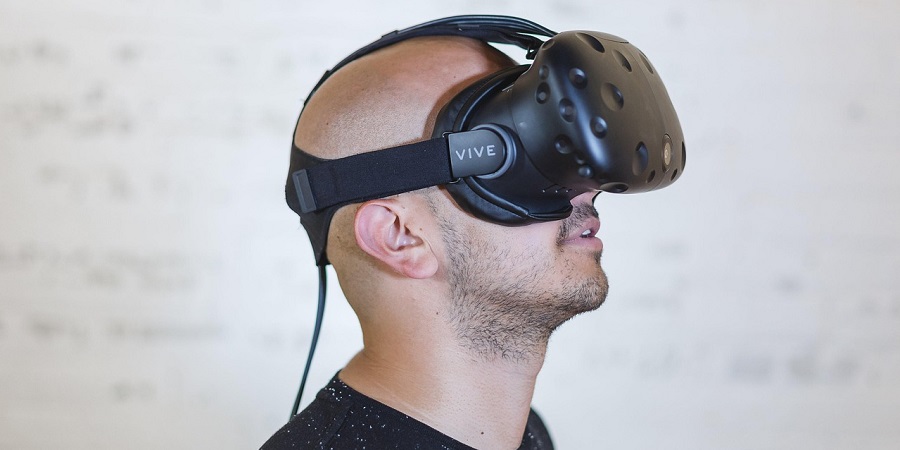
Mark Zuckerberg put all his eggs in the proverbial VR basket, and while at the time it seemed like an odd move, it’s an idea that has slowly begun to gain traction. While this might be a slow transition for us, it has been a painful and expensive slow burner for Meta, which has spent tens of billions of dollars to become a global leader in VR gaming.
When we think of VR gaming, roulette and perhaps casino gaming are not the first things that spring to mind. However, we have seen the way roulette platforms have embraced the growth of other innovative fintech ideas. So, how likely are we to see it embrace roulette gaming, and over the next decade or two, could it become a key area in the gaming industry in general, could roulette be the biggest growth sector, or could it be an idea that fizzes out?
The Power Of Embracing Change
Casino gaming companies have been at the forefront of change for 30 years; they’ve embraced online platforms, mobile apps, and alternative payment options such as cryptocurrency.
Over the last decade, cryptocurrency has become an intriguing innovation, focusing on payment methods rather than game design, which has always been the primary focus for iGaming companies.
In roulette, this has taken many forms and variants. While the game’s core isn’t compromised too much, it means that playing with an entirely new form of payment has become a more intriguing angle than playing a version of roulette that deviates too much from the original design. Bovada roulette games have tapped into this and offered a route for those eager to explore the new worlds of blockchain, crypto, roulette, and how these markets are combining to push gambling into an entirely new area.
For VR gaming companies, while it might be more of a challenge to get roulette players to buy a headset and take a leap into the unknown of the Metaverse, if cryptocurrency has been able to go from the obscure corners of the internet to one of the fastest growing niches within the roulette gaming sector, then there are reasons to be optimistic for those developers who specialize in VR and AR gaming.
Tapping Into A Mass Market
Social media has become a breeding ground for ideas that can tap into a mass market. In roulette gaming, this has taken many forms. We’ve seen SEO marketing become big business over the last decade. However, this dominance is being challenged by the rise of ChatGPT, social media influencers, and YouTube ideas like building the world’s biggest roulette wheel, as shown in the link below.
Now, tapping into a mass market comes with pros and cons. For any unique roulette gaming idea able to capture a global market, the upside is enormous. However, there are so many companies and designers all looking to reach this stage that the market is becoming increasingly saturated. Thus making it more challenging for new providers to prove themselves alongside the more traditional, conventional, and recognizable brands.
For any innovation to take hold in roulette gaming or in the online casino industry as a whole, there needs to be a positive response from the masses. Millions of people need to be on board with the innovation. We saw it in the early days of online casinos, then mobile apps, and more recently with crypto, and if it is not there with VR roulette gaming, this will be the key factor that relegates it to the annals of history.
Mapping Out The Long-Term Potential
The unveiling of Meta Quest 4 outlined the exciting path Meta is looking to forge. Having realigned their priorities toward VR development rather than becoming the dominant force in social media, which they have owned for decades, and continue to solidify their grip, given the dominance of Facebook and Instagram in the social media realm.
However, the bottom line is that there needs to be a shift in the demands that customers place on the roulette gaming sector. Given that it is quite a rigid game and lacks the same sort of design modularity as slots, it can be more challenging to sell the idea of innovation and variants to a subset of the casino gaming community that is set in their ways.
Ultimately, if VR gaming can capture a market and push the casino industry forward, it needs to succeed across a wide range of games, not just roulette. Until that happens, we can’t say for sure whether it has the potential to last in the market.